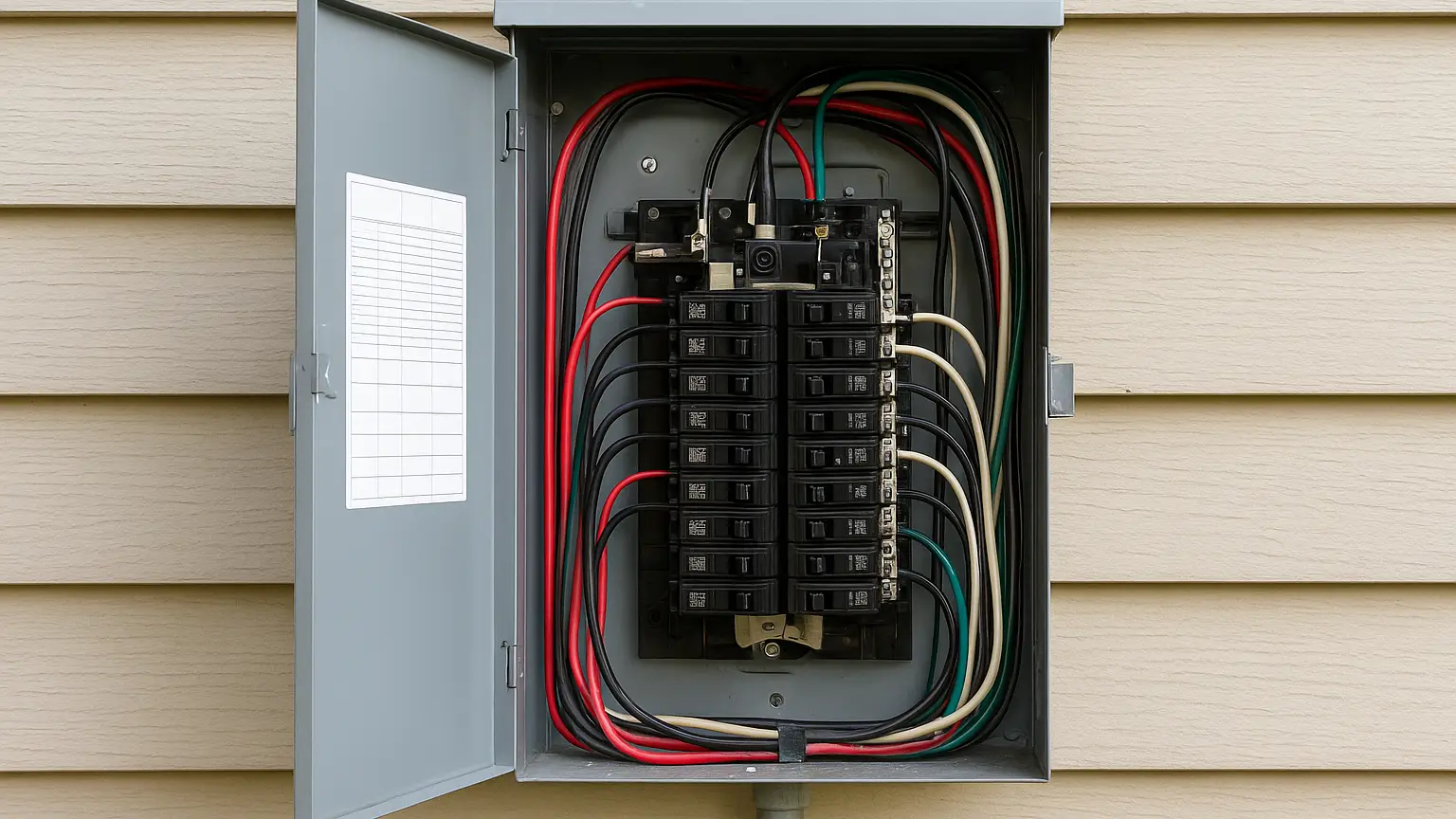
Most solar delays don't start on the roof. They start in a gray metal box on the side of your house. You can have perfect sun, a great quote, and a signed contract, and still watch your install date slip because of a panel nobody checked.
Here is a common story. A homeowner signs for a 9 kW system. The crew shows up, opens the electrical panel, and finds a 30-year-old box with no open slots and a busbar too small for the new power coming in. The job stops. A panel upgrade gets added. The permit goes back to the city. Weeks pass.
This can be avoided. You can check your panel before you ever sign for solar. A quick look now saves money, stress, and a second trip from the inspector later, and clean, closed-out permits can make future home sales with solar go more smoothly too.
Why Your Panel Matters More Than Your Panels
Solar panels make power. Your electrical panel decides if that power can safely enter your home. When a solar system turns on, electricity flows into your panel from two directions at once. It comes from the utility line and from your roof. Your panel was likely built for one direction only.
That is why inspectors look so closely at it. They want to know three things:
- Can the panel's metal bars handle the extra current?
- Is there physical room for a new solar breaker?
- Is the equipment safe, current, and properly labeled?
If the answer to any of these is no, the permit stalls. The good news is that each problem has a clear fix. Some are cheap. Some mean a full panel swap. Knowing which one you face is the first step to a smooth solar install.
The Inspector's Clipboard: Five Panel Red Flags
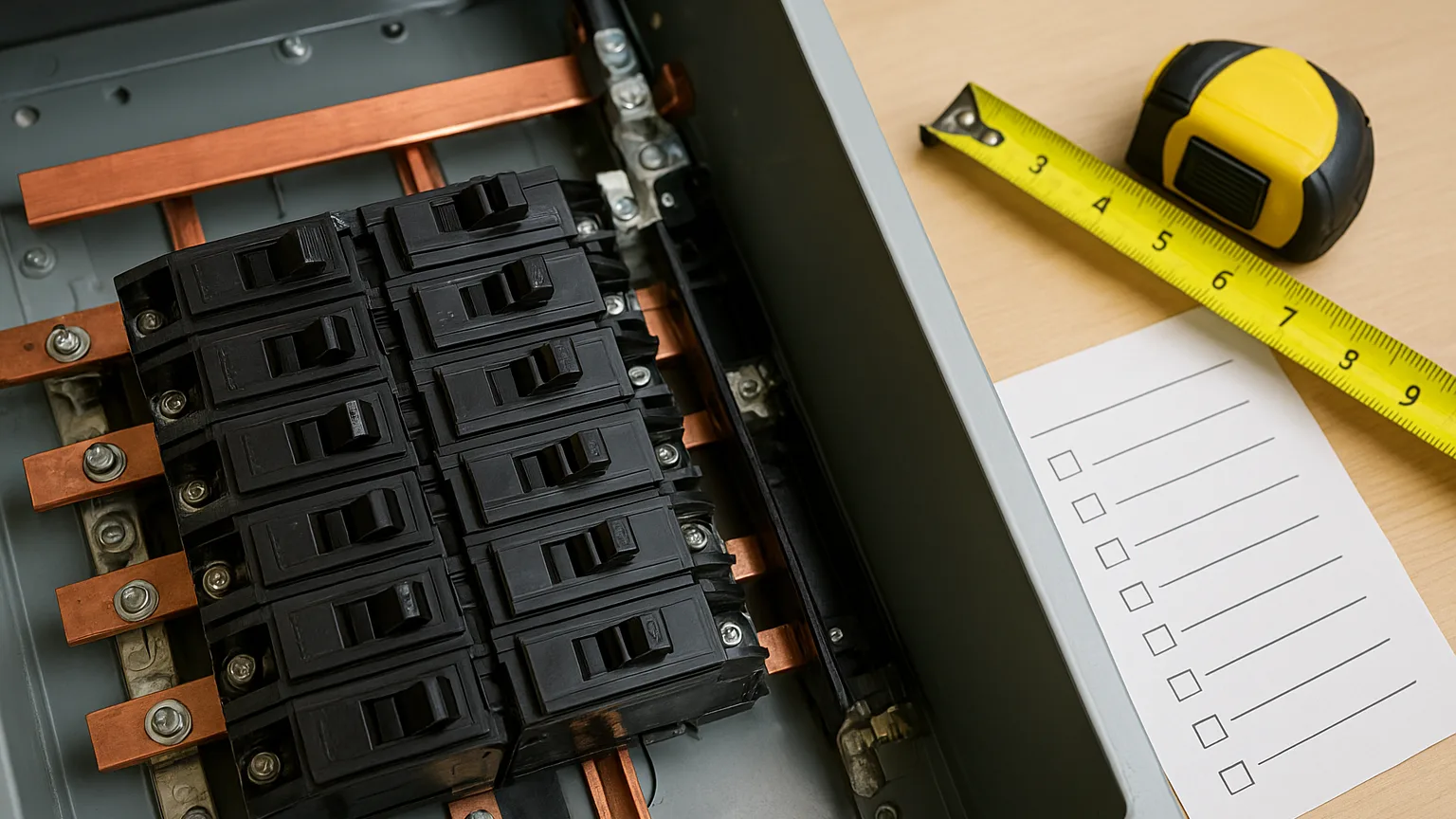
Picture the inspector standing at your panel with a checklist. These are the five items most likely to get a red mark. Walk through them yourself before your solar company does.
1. The Busbar Can't Take the Load
The busbar is the metal strip inside your panel that your breakers clip onto. Every busbar has a rating, often 100, 125, 150, or 200 amps. You can find it on the label inside the panel door.
Electrical code uses what many electricians call the 120% rule. Your main breaker plus your solar breaker can't add up to more than 120% of the busbar rating. The math is simple:
- A 200 amp busbar allows 240 amps total (200 x 1.2).
- If your main breaker is also 200 amps, that leaves 40 amps for solar.
- A 40 amp solar breaker supports roughly a 7.6 kW inverter.
- A 100 amp panel with a 100 amp main leaves just 20 amps, which fits only a very small system.
Want a bigger system? You may need a new panel, a smaller main breaker, or a different way to connect. The solar breaker also usually has to sit at the far end of the busbar from the main breaker, which adds another layout puzzle.
2. No Room for One More Breaker
Open your panel door and count the empty slots. Solar needs a double pole breaker, which takes two spaces. Many older homes have every slot full. Some already use "tandem" breakers, which squeeze two circuits into one slot. Not every panel is listed for tandems, and inspectors notice when they are used wrong.
3. Brands With a Bad Reputation
Some panel brands are known for breakers that fail to trip. Federal Pacific Stab-Lok and Zinsco are the two names that come up most. Old fuse boxes fall into this group too. Many solar installers simply won't tie into them, and many inspectors will flag them on sight.
4. Wear, Rust, and Heat Damage
Look for rust, scorch marks, melted plastic, or a burning smell. In hot climates, outdoor panels bake in the sun for years. Loose connections and corroded lugs are safety risks with or without solar. Adding a new power source to a damaged panel is a hard no.
5. Missing Grounding, Clearance, or Labels
Inspectors also check the basics. Is the system grounded and bonded the right way? Is there a clear work space of about 30 inches wide and 36 inches deep in front of the panel? Will the new solar labels and a rapid shutdown switch have a proper home? A panel tucked behind a water heater or a new patio wall can fail for this alone.
"Panel surprises are the top reason we see install dates slide," says Marcus Ellison, senior solar design specialist at Capital Energy. "When a homeowner sends us a clear photo of the panel label on day one, we can design around it instead of finding out on install day."
Ellison notes the problem is common in older desert homes. In those homes, outdoor panels have spent decades in the heat, so a quick photo of the label and the inside of the box is usually the fastest way to spot trouble early.
When Fixing Beats Upgrading, and When It Doesn't
Not every flag means you need a brand new panel. A licensed electrician will weigh your system size, your home's power needs, and your panel's condition. Here is how those choices usually play out.
Smaller Fixes That Often Work
If your panel is in good shape but the busbar math is tight, there are a few common workarounds.
- Main breaker derate: Swapping a 200 amp main for a 175 amp main frees up room under the 120% rule. This only works if a load calculation shows your home doesn't need the full 200 amps.
- Line side tap: The solar ties in before the main breaker, so it skips the busbar limit. Not every utility or panel allows it.
- Breaker cleanup: Combining or moving circuits can open the two slots you need.
- Smaller system: Sizing the solar to fit the panel you already have.
When a Full Upgrade Is the Right Call
A panel upgrade is usually needed if you have a recalled or risky brand, a fuse box, visible damage, or a 100 amp service with big plans. Big plans mean things like an EV charger, a battery, a heat pump, or a large solar array. In those cases, a patch job just delays the same upgrade by a year or two.
Think about your home five years from now. Many families add solar to cut summer cooling costs, and knowing how solar handles AC bills helps you size both the system and the panel that feeds it. If an EV or battery is on your list, upgrading once to a 200 amp solar-ready panel is often cheaper than two separate jobs.
Quick Answers Homeowners Ask
How do I know if my panel is solar ready?
Check the label inside the door for the busbar rating and main breaker size. Count open slots. Look up the brand. If you have a 200 amp busbar, at least two open slots, a trusted brand, and no damage, you are likely in good shape for a mid-size system.
How long does a panel upgrade take?
The work itself is often one day. The wait for permits and utility scheduling can add one to four weeks, depending on your city.
Can my solar company handle the upgrade?
Some can. Others hire it out. Either way, ask that a licensed electrician pulls the permit and that the upgrade is inspected with the solar work, not after it.
Check the Box Before You Chase the Sun
Solar permits rarely fail because of the panels on your roof. They fail because of the panel on your wall. The busbar may be too small for the new current. There may be no room for a solar breaker. The brand may be one inspectors don't trust, or the box may show rust, heat damage, or poor clearance. Each issue has a clear path forward, from a simple main breaker swap to a full 200 amp upgrade.
The smartest move is to look before you sign. Snap a photo of your panel label, count your open slots, and have a licensed electrician give it an honest review. A few minutes of checking now can keep your solar install on schedule, keep your family safe, and make sure the power you make on the roof has a solid place to land.


